Trick 5 / 5
Compare on the same basis
The nutrition table gives its figures per 100 g or per 100 ml, which makes it the common basis for comparing products. The traffic light is another option.
It works for products of the same kind: compare yoghurt with yoghurt, bread with bread.
How to read the traffic light
- Green: low
- Amber: medium
- Red: high
When you’re comparing two products of the same kind, the traffic-light colours make a good first filter. Fewer reds is a good sign, but it’s only part of the decision. Check the ingredients list too.
Not every product has a traffic light, though. If there is one, use it: it’s easier. If not, compare the nutrition tables. Put the packs side by side and look at the “por 100 g” (per 100 g) column on both.
Prawn rissóis
- 868 kJ
207 kcal 10% - 8.8 g Fat (Amber: medium) 13%
- 1.2 g Saturates (Green: low) 6%
- 1.7 g Sugars (Green: low) 2%
- 1.17 g Salt (Amber: medium) 20%
- 868 kJ
Meat rissóis
- 880 kJ
210 kcal 10% - 8.2 g Fat (Amber: medium) 12%
- 1.7 g Saturates (Amber: medium) 9%
- 1.4 g Sugars (Green: low) 2%
- 1.31 g Salt (Amber: medium) 22%
- 880 kJ
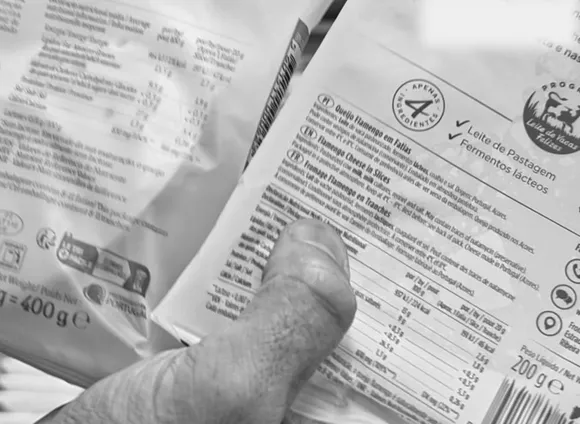
Traffic light? Compare the colours. No traffic light? Turn the pack over and compare the 100 g column.